
Coating or blanket?
Coating when geometry or inspection access argues against a thick wrap. Blanket when the site already jackets wrap systems.
Applications
Weathered shells, inspection access and mixed hot or cold contents. Choose the family from the medium temperature, then request the sheet for that grade.
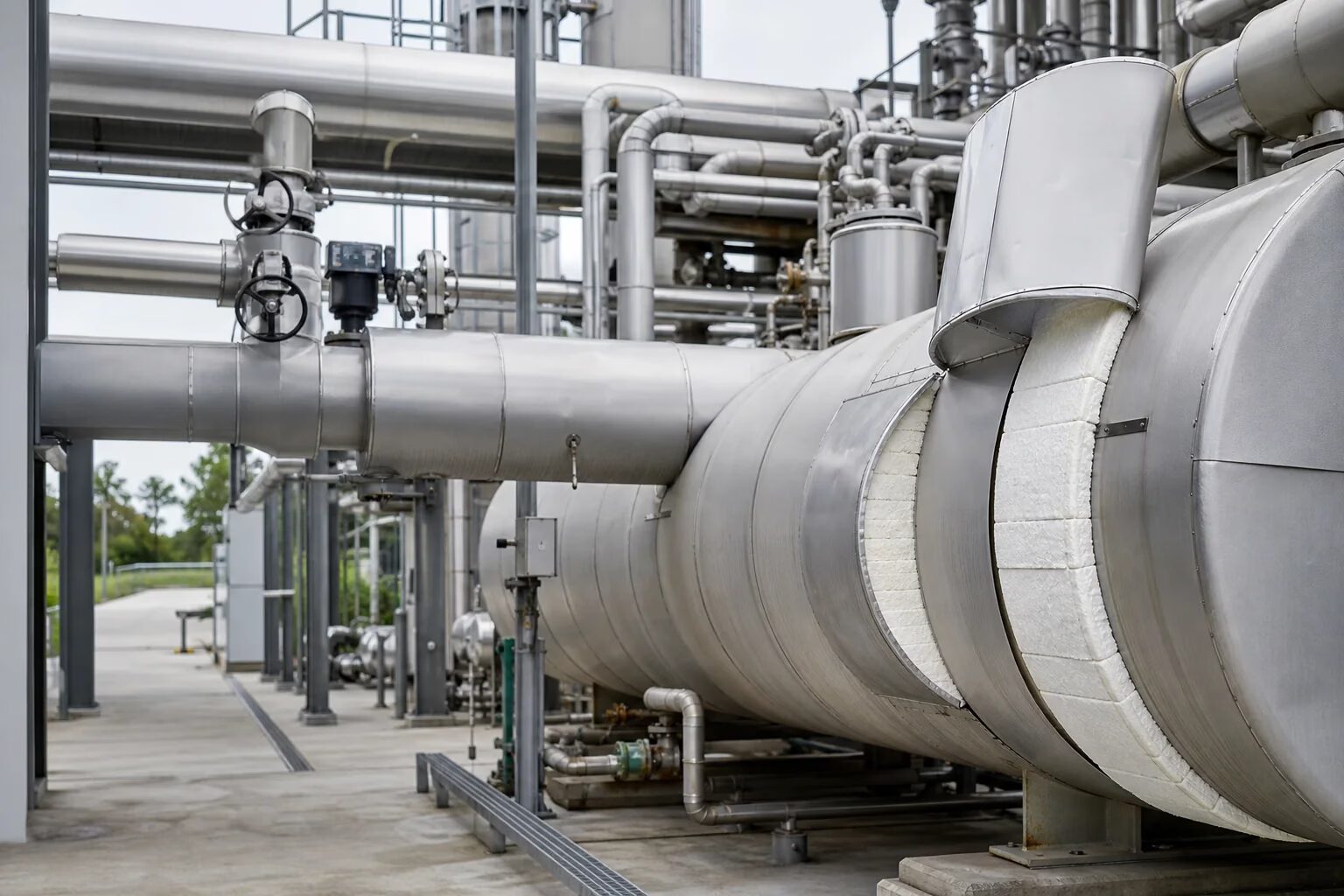
A tank loses or gains heat across a large shell. Cladding, nozzles and ladders make a uniform wrap slow. Inspection often needs the jacket opened.
The first question is still temperature: hot contents point to ST-C-HOT or ST-B; chilled contents point to ST-C-COLD.
Large-radius wrap systems can be cumbersome around shell penetrations and depend on effective weather protection. Corrosion under insulation is a tank problem as much as a pipe problem. A coating can provide a thin, inspectable layer; it is not a corrosion specification by itself.
Hot tanks: ST-C-HOT as the mid-coat, ST-B-FG where wrap is accepted. Cold tanks: ST-C-COLD. For tank crowns exposed to solar load, ST-C-RC can be added as a radiative finish, not as the only layer.
No percentage heat-loss reduction is stated as a family guarantee. Specify performance from the current TDS and the project duty.
Coating when geometry or inspection access argues against a thick wrap. Blanket when the site already jackets wrap systems.
No. CUI is a system and inspection topic. We match the grade and issue documents.
No. Temperature of the contents decides the family.
Typical values live on the family page. Specify only from the current TDS for the supplied grade. System design stays with the buyer’s engineer.