
Will this stop condensation?
Only as a calculated system. Climate, thickness and finish have to be named. This page does not publish a standalone guarantee.
Applications
Chilled lines, refrigerant pipe and cold tanks where the skin must stay dry. Condensation control depends on thickness, climate and finish — not on a product name alone.
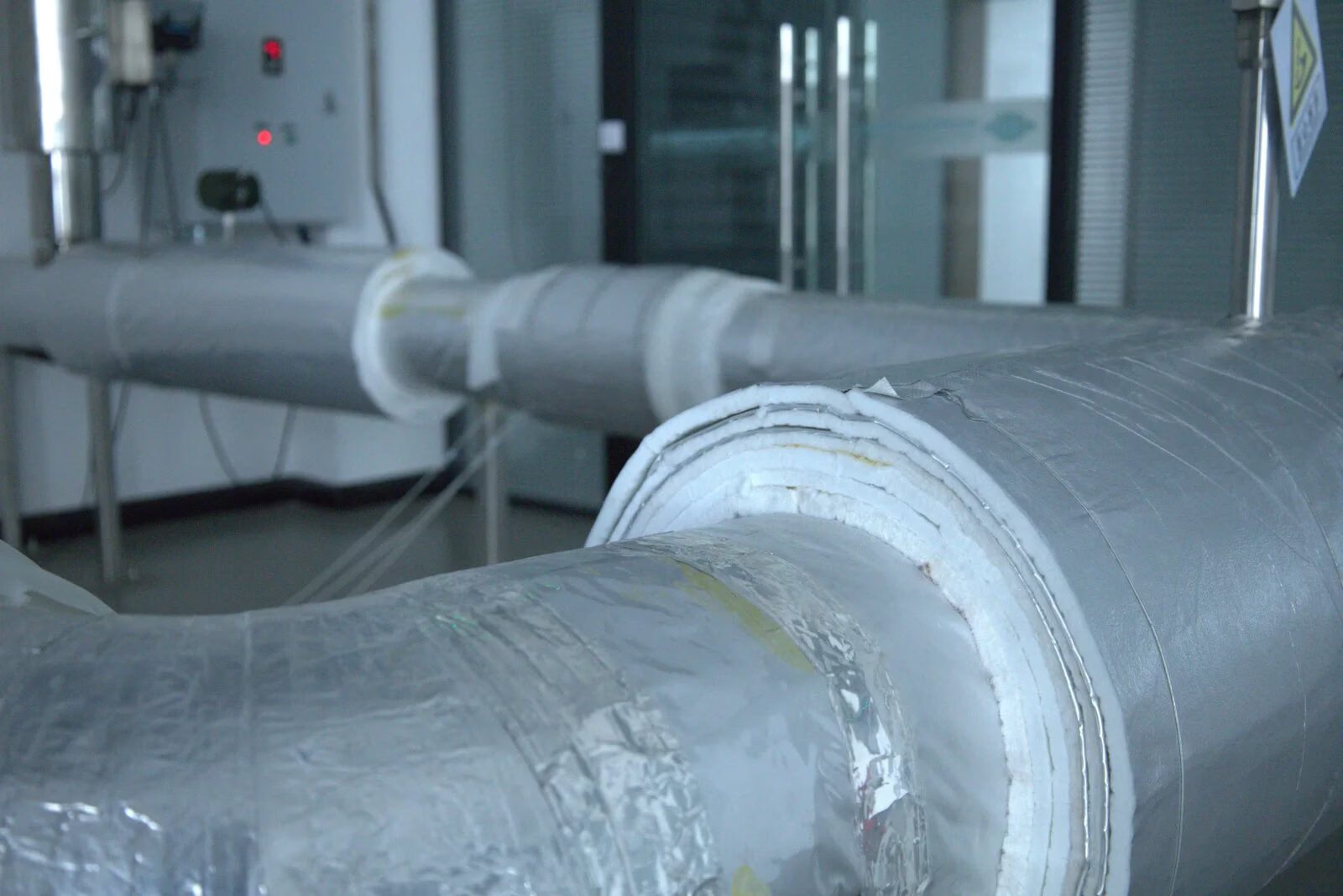
A cold line sweats when the jacket sits below the dew point. Water on the surface is an operations problem; water in the insulation is a corrosion and energy problem.
The starting point is the operating temperature, ambient humidity and required surface condition — not the coating code.
Poorly sealed or damaged insulation systems can admit moisture and lose performance. A coating does not cancel climate. If the dry-film build is short of the calculated thickness, the surface may still fall below the dew point and condense.
Cryogenic and LNG service are outside the scope of this page. Request a duty review and the applicable TDS before selecting a family.
ST-C-COLD is the first family: a water-based mid-coat for −40 to 150 °C as stated on the family card. A compatible finish is part of outdoor systems.
Anti-condensation is specified as a system. Request the current TDS with operating temperature, ambient humidity and substrate.
Only as a calculated system. Climate, thickness and finish have to be named. This page does not publish a standalone guarantee.
No. LNG and deep-cryogenic lines are outside the scope of this page. Request a duty review and the applicable TDS before selecting a family.
No. They are different families. Specify from the TDS for the grade used.
Typical values live on the family page. Specify only from the current TDS for the supplied grade. System design stays with the buyer’s engineer.